
01The problem
Planning a trip means stitching together blogs, maps, weather forecasts and booking sites, then turning all of it into a plan that fits your dates, your group and the weather you'll actually get. Generic AI chat can produce an itinerary, but it doesn't know the forecast, doesn't produce a packing list for it, and doesn't connect to anything you can book.
02The bet
If a traveller can describe a trip in a few taps and get a day-by-day plan that fits their dates, interests and the forecast, they'll plan with it and book activities through it.
Who it was for
Leisure travellers planning city and short trips who don't want to research for hours.
How I'd measure it
Trips created per user, return visits before departure, and clicks through to activity booking partners.
What I left out
Flight and hotel booking, social features and group chat. They were out of scope until the core plan proved useful.
03My role
I was the whole team: product strategy and scope, UX decisions, the Flutter app, the Firebase and Genkit backend, prompt design, store releases and incident response.
I work with AI coding agents as my engineering team. I make the product and architecture decisions, set the standards, and review and test what ships. That's how one person can build and run a production app across two stores and a cloud backend. It's also how I work on client projects.
04What I built
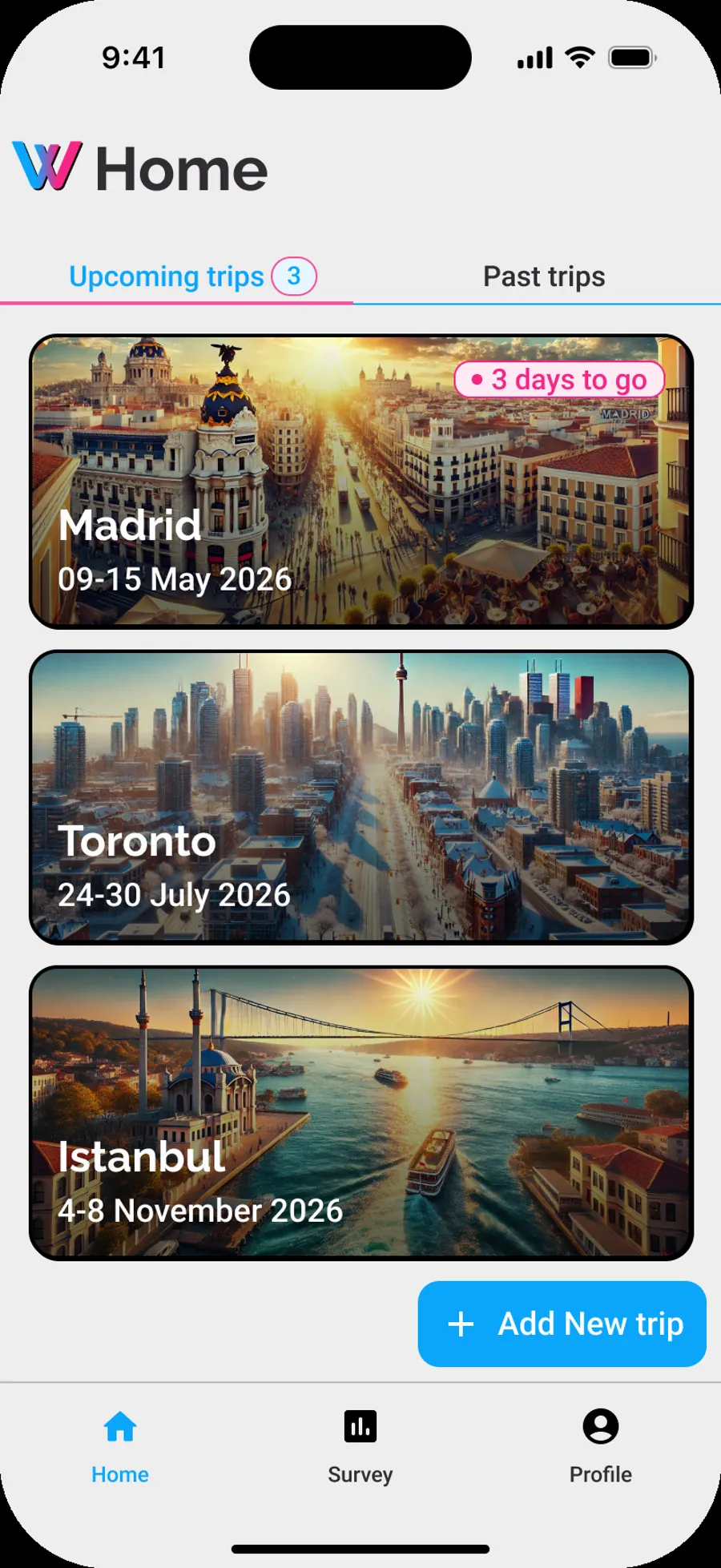
- Trip wizard: destination, dates, travellers and interests in a few steps.
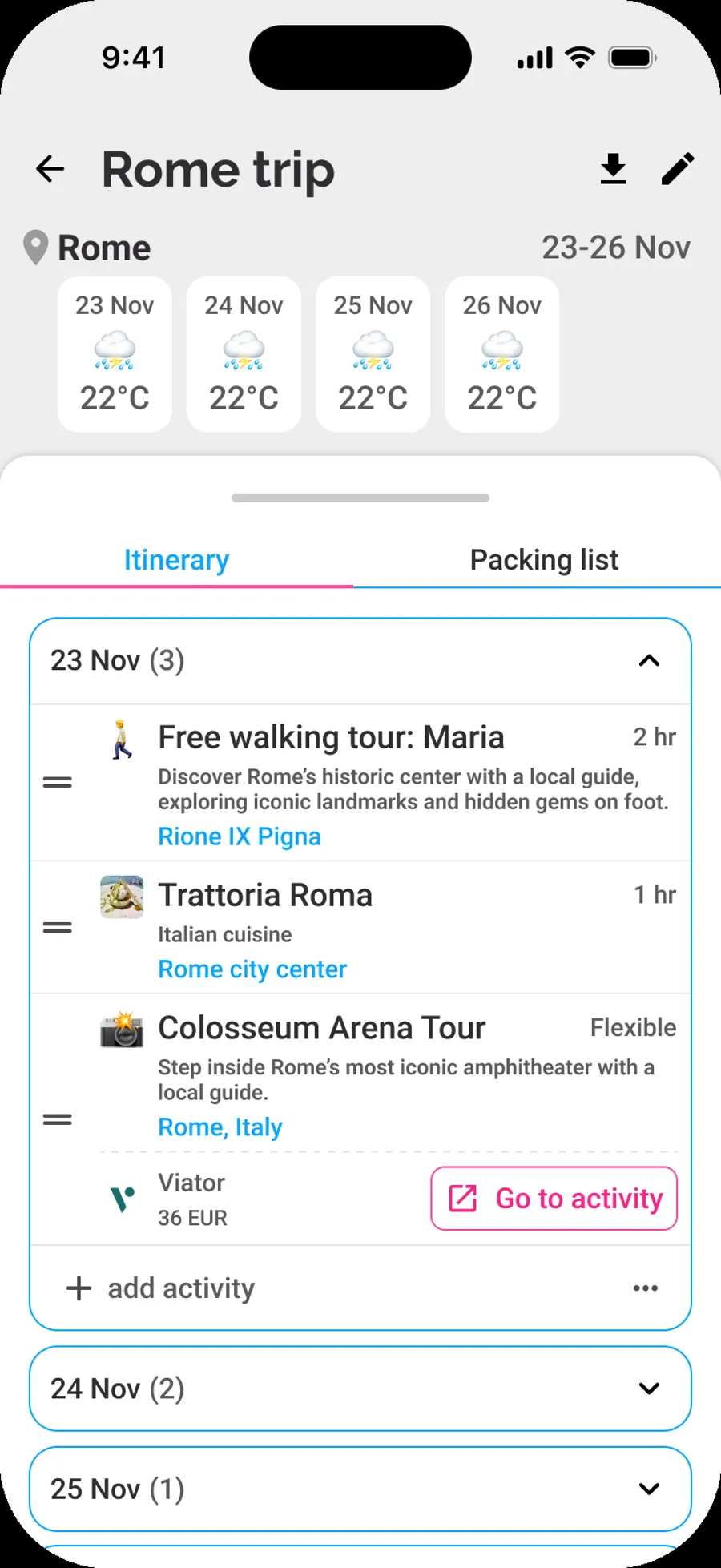
- AI itinerary: a day-by-day plan generated in one pass and stored per trip, editable afterwards.
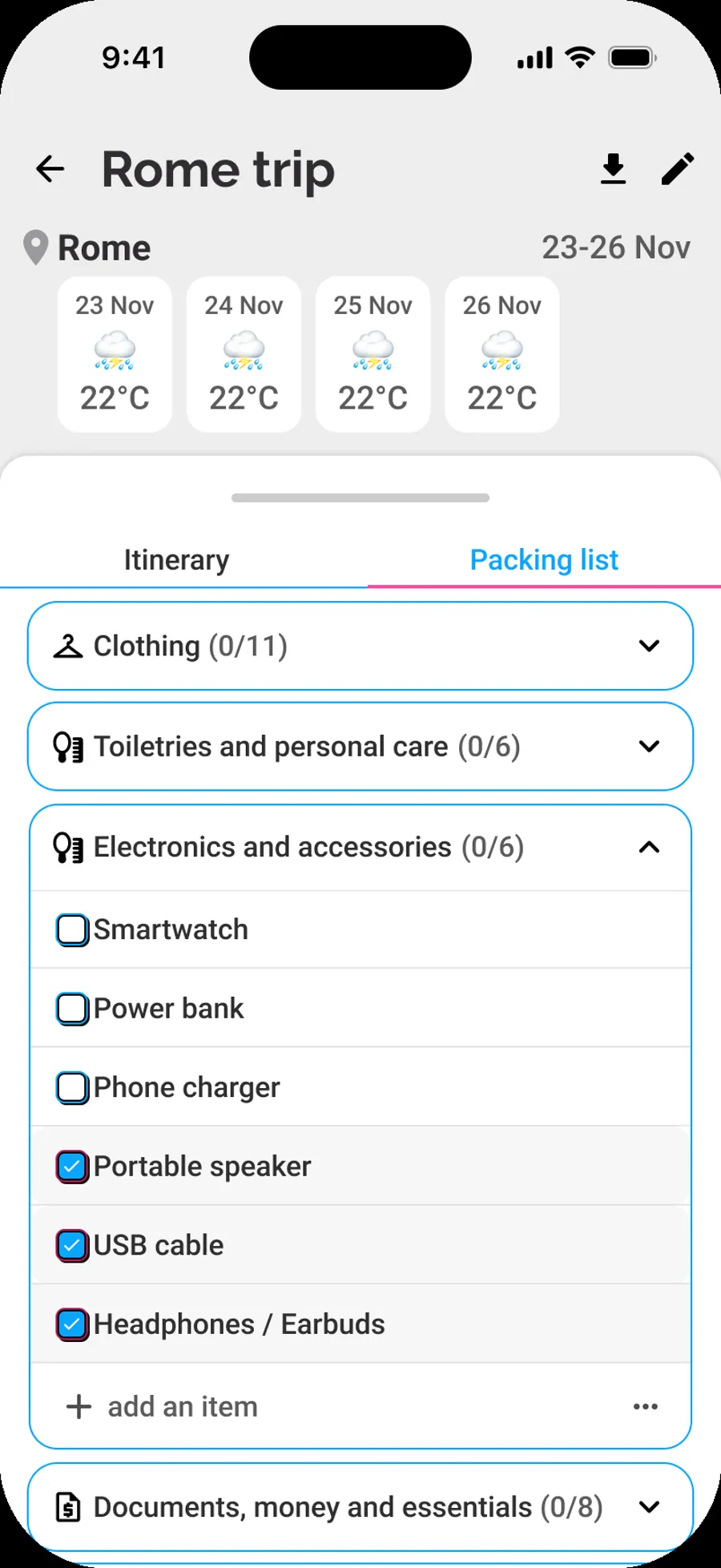
- Weather-aware packing list based on the forecast for the destination and dates.
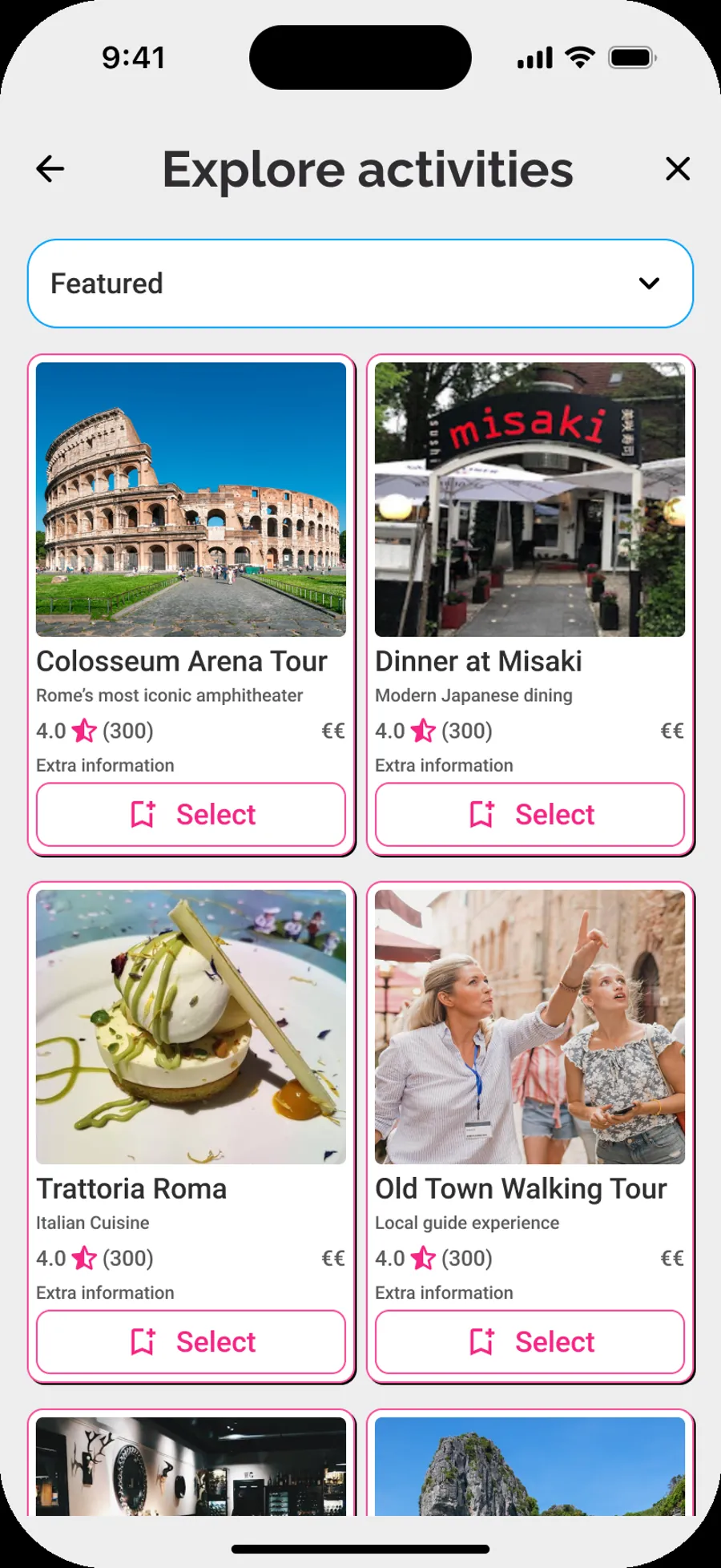
- Bookable activities: live tours and tickets from Viator and Tiqets, pulled through their affiliate APIs and matched to each day of the plan. Bookings earn a commission.
- Trip assistant chat that answers questions about the user's own trip.
- PDF export and sharing, plus sign-in with email, Google, Apple, Facebook or as a guest.
05Architecture
A Flutter app on Clean Architecture, talking to Firebase. Every AI call runs server-side in Cloud Functions, so model choices, prompts and API keys never ship inside the app.
06Key decisions and trade-offs
One AI call for the whole itinerary
The full multi-day plan is generated in a single call instead of one call per day, which keeps days consistent with each other and cuts round trips.
Structured output, validated by schema
Every AI response must match a defined schema before the app sees it, so users never get a half-formed plan.
A different model for each task
A stronger model for itinerary reasoning, a cheaper one for chat, packing lists and image prompts.
Partner products matched on the server
The backend calls the Viator and Tiqets APIs and matches their tours and tickets to each day of the itinerary. Partner API keys never reach the device.
Cover images are optional
Image generation is cached, and if it fails the trip still saves without a cover.
One platform: Firebase
Auth, data, functions, hosting and monitoring in one place, which suits a team of one.
07Running it in production
Shipping is the start. Keeping an AI product working after launch is where most of the real work is.
Trip generation stopped working
June 2026 · AI providerWhat happened
Itineraries and cover images stopped generating with no deploy or code change. The error looked like an API key problem.
Root cause
The AI provider had retired the model versions the app was pinned to. The backend caught the error and returned an empty result, which hid the real cause.
Fix
Moved each flow to a current model, added retries with backoff for overloaded models, made failures show up as clear errors, and updated image handling for the new model.
A later Android release opened to a blank screen. I halted the staged rollout the same day, so users stayed on the working version, and fixed the start-up path.
Then I audited my own product
After that I reviewed the codebase the way an outside engineering lead would and ran a hardening sprint on what I found:
08Results
What I delivered
- A production AI app, live on the App Store and Google Play
- An automated build and release pipeline to both stores
- Production issues found, contained and fixed
- AI cost kept at cents per trip by matching models to tasks
What didn't work
Usage stayed small. Building the product was the part I could control. Reaching travellers without a marketing budget was the hard part, and a consumer app lives or dies on distribution.
That shaped what I do now: help travel companies that already have customers and distribution put AI into what they sell.
09What I'd do differently
- Prove distribution before building breadth.I planned a family of four travel apps before the first had traction. In July 2026 I cut back to one app and stopped the rest.
- Set up the boring parts on day one.CI, crash reporting and security rules came after an outage. On client work they come first.
- Design for model change from the start.Models as configuration, with a retirement date and a fallback, instead of hard-coded names.
- Show progress instead of a spinner.Stream the plan day by day so the wait feels shorter, even when the AI isn't faster.
Want this for your travel product?
I bring the same approach to client work: one clear problem, a working prototype on your data in a week, and a product that keeps running after launch.